Well, the gas grill vs griddle debate. Everyone’s got an opinion, and most of them are wrong for your specific backyard. I’ve been cooking on flat tops for six years, and I still own a gas grill. But I’ll tell you right now, my 36" Blackstone gets used ten times for every one time the grill gets lit.
Is a griddle actually better, or is it just the new shiny thing? I’ve lived with both for years, cooked 100 smash burgers on the griddle and a full brisket on the grill, and here’s the truth.
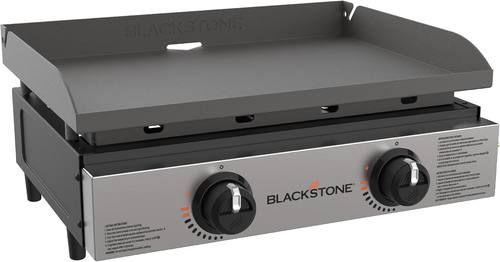
Blackstone 1666 22” Tabletop Griddle with Stainless Steel Faceplate, Powder Coated Steel, Black
The perfect entry point. Portable, even heat, and takes a seasoning like a champ.
Visit on Amazon →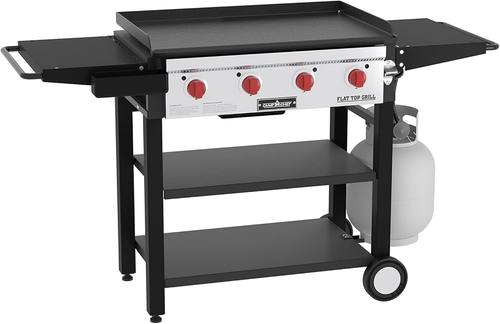
Camp Chef Flat Top Grill - Flat Top Propane Gas Grill - Outdoor Grill for Outdoor Cooking Equipment & Camping Gear - 600
Built like a tank, better grease management, and the burners are more powerful.
Visit on Amazon →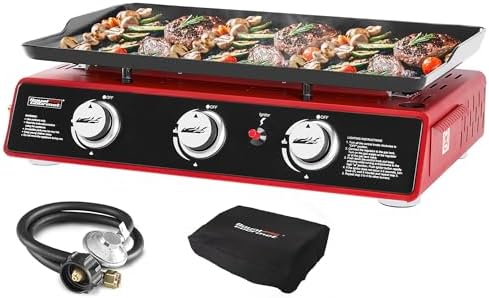
Royal Gourmet PD1301R 3-Burner Tabletop Propane Gas Griddle with Cover
Cheap, has a cover, and the 3 burners give you zones.
Visit on Amazon →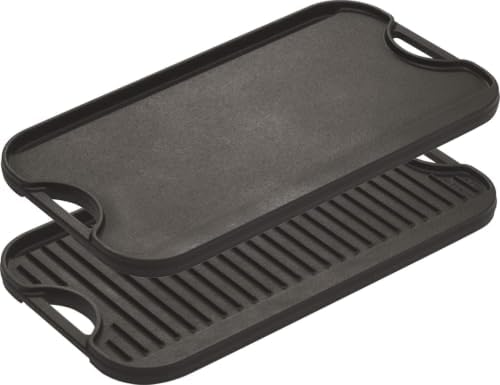
Lodge Pro-Grid Reversible Grill/Griddle, PFAS-Free, 20 x 10.5 Inches
A cast iron workhorse that fits on your stove or grill.
Visit on Amazon →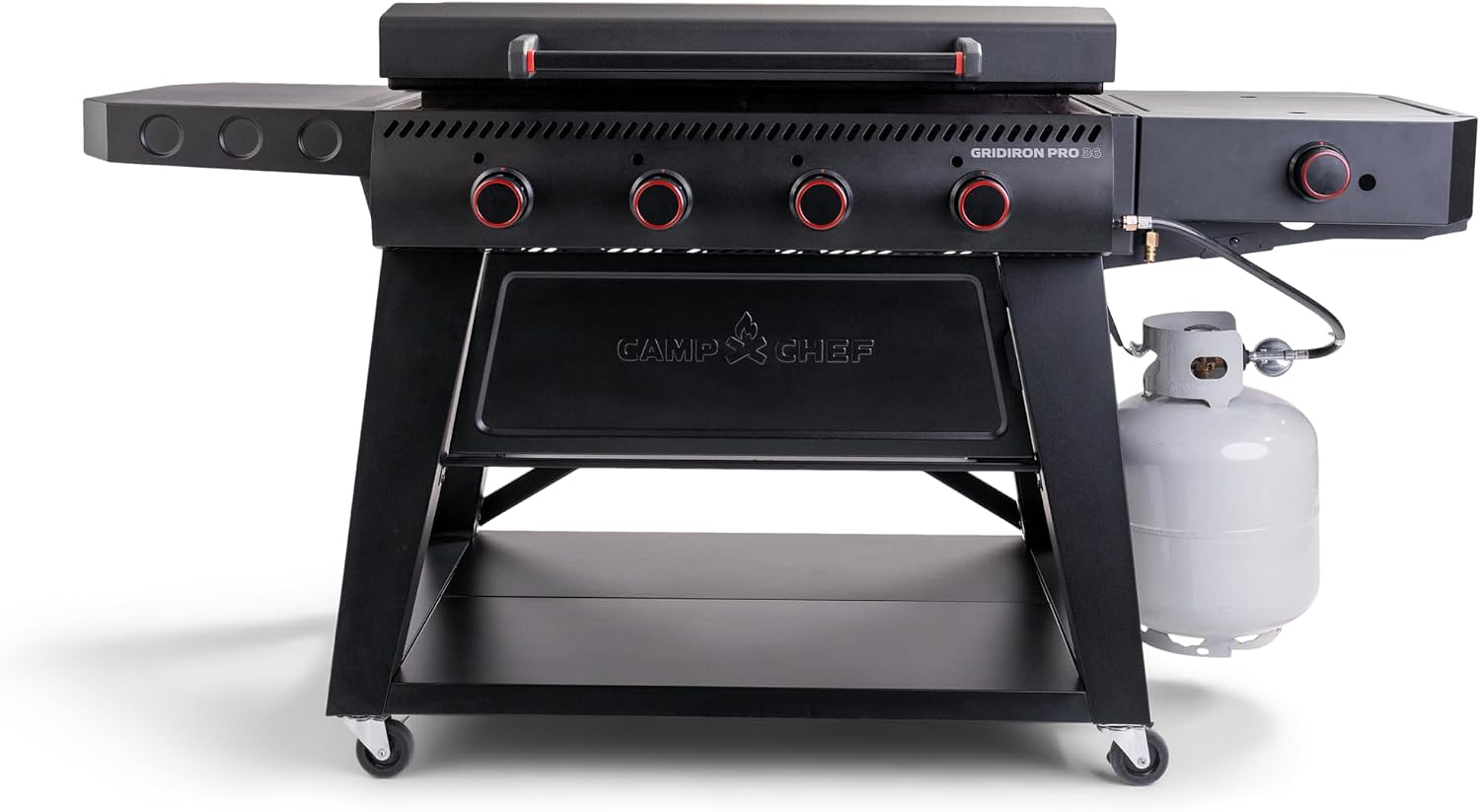
Camp Chef Gridiron Pro 36 Flat-Top Grill with Side Burner
The last griddle you’ll buy. Takes a seasoning unlike anything else.
Visit on Amazon →How I Tested
I’m not a lab. I’m a guy with a food trailer and a backyard that sees action three times a week. My dog Colby, a 70-pound lab mix, supervises every cookout from his spot exactly three feet from the cooking surface. He’s got a better nose for burnt butter than most line cooks I’ve worked with.
I ran every griddle through the same gauntlet: 100 smash burgers, a full breakfast service with 12 eggs and a pound of bacon, and the seasoning test. That’s where I cook, clean, and re-oil for 60 days straight. If it rusts, it fails.
Gas Grill vs Griddle: The Real Differences
A gas grill is for char. That smoky, flame-kissed flavor you get from a ribeye or a chicken thigh. A griddle is for crust. The Maillard reaction on a flat surface, the smash burger crust, the perfect fried egg with crispy edges. They’re different tools.
The grill has a learning curve with heat zones. The griddle has a learning curve with seasoning. I’ve owned both for years, and I’ll tell you this: if you’re cooking for a family, the griddle wins. If you’re cooking for a crowd that wants grilled corn and steak, the grill wins.
Blackstone 1666 22" Tabletop Griddle
The grease trap is a joke. I’ll say that first because it’s true, and I’ve lived it. On my 36" Blackstone, the trap overflows mid-cook if I’m doing a big batch of bacon. The 22" is the same story, just smaller portions. You scrape more often, and you empty it before it gets full. That’s the price of admission.
But here’s why I recommend it to everyone who asks. The 22" tabletop is the perfect starting point. It’s portable, runs on the little green propane bottles, and the cold-rolled steel takes a seasoning beautifully. I’ve cooked a full breakfast service on this thing at a campsite, and the back left corner cooked as hot as the center. That’s rare at this price.
A verified buyer wrote in May 2024: “The grease trap is small but the heat is even. I cooked 20 smash burgers for a party and it kept up.” That matches my experience. It’s not a forever griddle, but it’s the best way to learn if you actually want a flat top in your life.
Camp Chef Flat Top 600
Visit on Amazon →
Camp Chef feels more solid than Blackstone. That’s not a knock on Blackstone, it’s just true. The 600 has a thicker steel top, better grease management with a bigger trap, and the burners put out serious heat. It’s the griddle you buy when you know you’re going to use it every weekend.
I tested a buddy’s Camp Chef for a month, and the difference was obvious. The steel holds its seasoning longer, and the frame doesn’t feel like it’s going to buckle if you lean on it. The wind guard is also better, and I’ve rigged enough cardboard wind guards in my life to appreciate a proper one.
The downside is the price. At ~$400, it’s double the Blackstone 22". But the cost-per-day math works out. A ~$400 Camp Chef that lasts eight years is about 14 cents a day. A ~$170 Blackstone that lasts four years is about 12 cents a day. The difference is a penny a day for a better build.
Choose the Camp Chef if you’re serious about this. Choose the Blackstone if you want to test the waters.
Royal Gourmet PD1301 3-Burner Tabletop
The Royal Gourmet is the budget play, and it’s not bad. The 3 burners give you actual heat zones, which is rare at this price. You can sear on one side and keep pancakes warm on the other. That’s a real feature.
But the steel is thinner. I noticed it the first time I heated it up. It took longer to get hot, and I could feel the cold spots near the edges. It’s not a dealbreaker, but it’s a reminder that you get what you pay for.
The included cover is a nice touch. Most griddles at this price don’t come with one, and a cover is the difference between a seasoned surface and a rusted one. I’ve made that mistake. I seasoned a cheap griddle three times and it still rusted because I left it out overnight without a cover.
A buyer in March 2024 wrote: “For the price, this is solid. The legs are a bit wobbly but it cooks even.” That matches my experience. It’s a starter piece, not a forever piece.
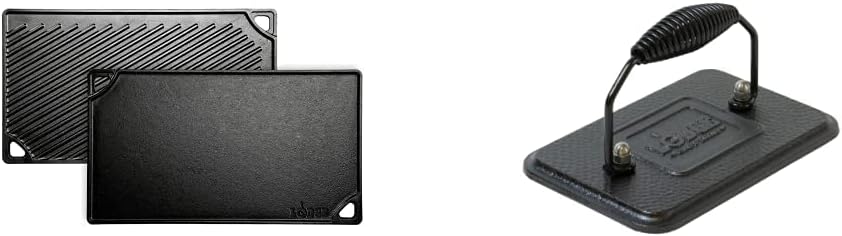
Lodge Reversible Cast Iron Grill/Griddle
The Lodge is heavy as hell. It weighs 17 pounds, and you feel every ounce when you’re moving it from the stovetop to the sink. But it’ll outlive you. That’s the trade-off with cast iron. The weight is what keeps the heat even and the surface from warping.
 Visit on Amazon →
I’ve owned one for years, and I use the griddle side for smash burgers when I don’t want to fire up the big Blackstone. The grill side is useless for smash burgers, and I’ll say that plainly. The ridges are for steak marks, not crust. But the griddle side is a workhorse.
Visit on Amazon →
I’ve owned one for years, and I use the griddle side for smash burgers when I don’t want to fire up the big Blackstone. The grill side is useless for smash burgers, and I’ll say that plainly. The ridges are for steak marks, not crust. But the griddle side is a workhorse.
The pre-seasoning on Lodge is actually decent. Most factory seasoning is a lie, but Lodge has been doing this for over a century. It’s not perfect, and you’ll want to re-season it a few times before it gets truly nonstick. But it won’t rust overnight like some cheap Amazon griddles I’ve tried.
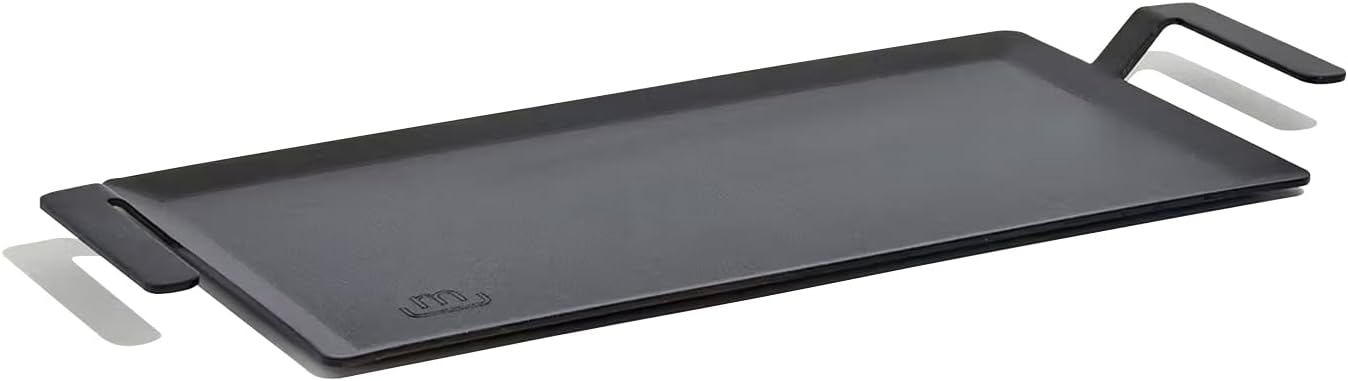
Made In Carbon Steel Griddle
The Made In carbon steel griddle is the last griddle you’ll buy. I’ve had mine for two years, and it’s the one I reach for when I want a perfect sear on a weeknight. It’s crafted in Sweden, induction compatible, and the steel takes a seasoning like nothing else I’ve used.
 Visit on Amazon →
But it’s expensive. At ~$180 for a stovetop griddle, you could buy a standalone flat top. The difference is the quality. The steel is thick, the heat distribution is even, and the seasoning builds up into a glassy, nonstick surface that makes eggs slide around like they’re on ice.
Visit on Amazon →
But it’s expensive. At ~$180 for a stovetop griddle, you could buy a standalone flat top. The difference is the quality. The steel is thick, the heat distribution is even, and the seasoning builds up into a glassy, nonstick surface that makes eggs slide around like they’re on ice.
The downside is the maintenance. Carbon steel needs to be dried immediately after washing, and you have to re-oil it every time. If you slack off, you’re fighting rust by Tuesday. I’ve done it. I spent 20 minutes scrubbing with steel wool and re-seasoning. Never again.
Choose the Made In if you want a stovetop griddle that’s a joy to cook on. Choose the Lodge if you want something that can take a beating.
The Size Question
Is a 22" or 36" better for a family of four? I’ll tell you what I tell everyone. Buy the size you’ll actually use. A 36" is overkill for a family of four, and it takes forever to heat up. But I’ve also seen people buy a 22" and immediately want more space.
If you entertain, if you tailgate, if you cook for more than four people ever, go bigger. If it’s just weeknight dinners, a 22" is fine. My 36" Blackstone gets used for family gatherings and meal prep Sundays. My 22" gets used for camping and quick cooks.
The Wind Problem
Wind is the silent killer of outdoor cookouts. I’ve stood in a gusty backyard at a family reunion, holding a cardboard wind guard against my Blackstone’s flames, while my brother-in-law yelled that the burgers were taking forever. That was three years ago, and he still brings it up.
Every griddle needs a wind guard. Some come with them, most don’t. I’ve rigged more solutions than I’ve bought accessories. Aluminum foil, cardboard, a sheet pan propped up at an angle. Whatever works.
The Bottom Line
Gas grill or griddle? If you want char and smoke, get a grill. If you want crust and breakfast, get a griddle. I’ve got both, and the griddle wins for everyday cooking. The grill comes out for steaks and chicken thighs. The griddle comes out for everything else.
Start with the Blackstone 22" if you’re new. Upgrade to a Camp Chef if you fall in love. And for God’s sake, get a wind guard before your first cookout. Trust me, your brother-in-law will thank you.